
This is it. I’m calling it. The “What’s a podcast?” era is over.
2025 was the year the podcast world finally acknowledged the audio landscape had shifted for good. While the industry debated definitions and formats, audiences simply kept moving to new platforms, new screens, and new behaviors.
The podcast industry is always changing. Throughout the years in the Amplifi Thought Letter, and in my NYU Business of Podcasting class, we’ve tracked this journey across three distinct eras. And now, in 2026, we enter the fourth.
Era 1: The “MeUndies” Era
This era represents the dawning days. Podcasting began as a small, intimate medium. Public radio dominated the charts, and early brands like MeUndies took a chance on host-read ads. There was an infamous Mailchimp ad on Serial. The entire industry generated roughly $750,000 a year. Simple. Direct. Audio-only and some glorious trailblazing shows.
Era 2: The Spaghetti-Against-the-Wall Era
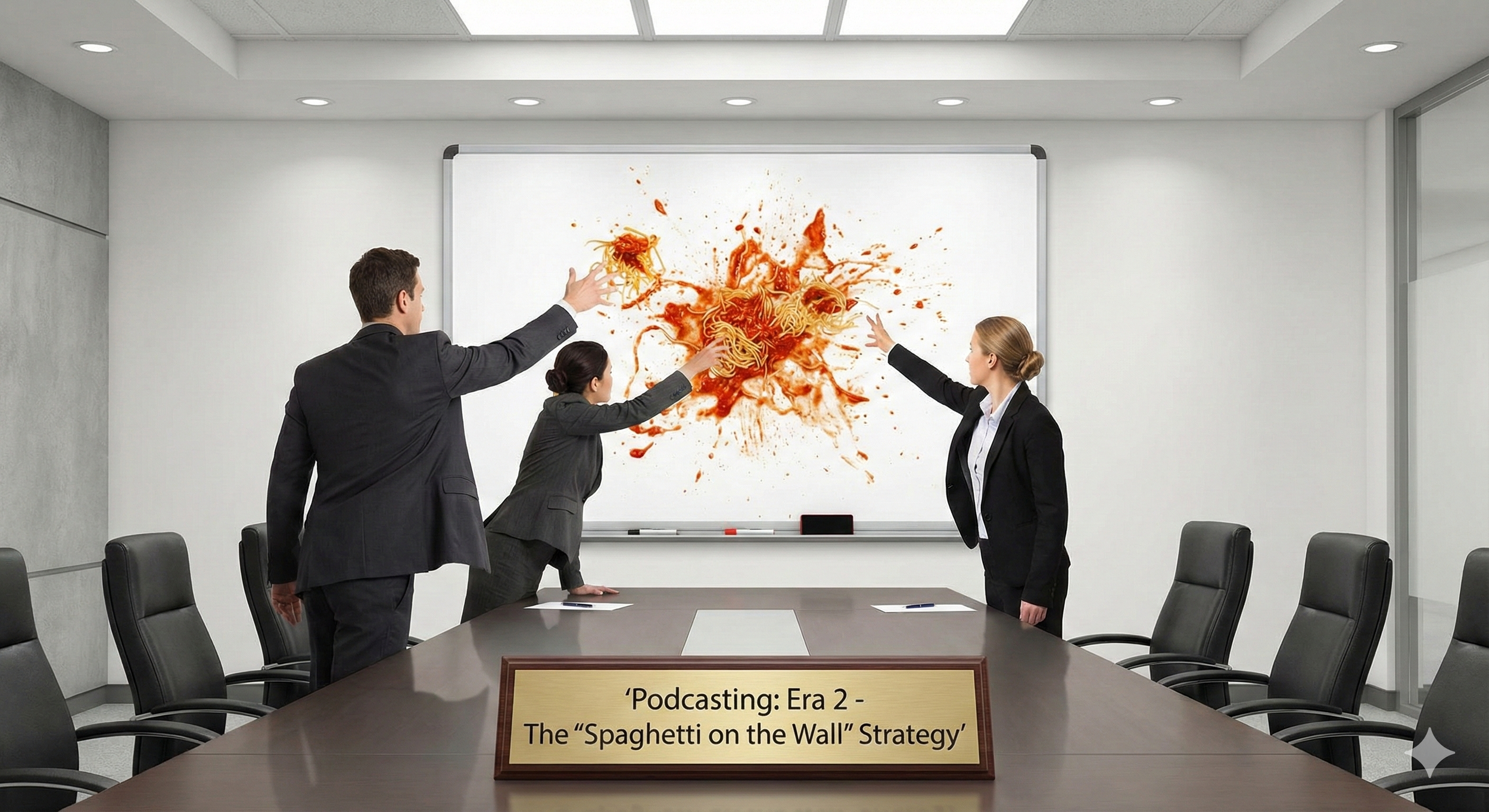
Then came the rush. Big business discovered podcasting. Expansion and experimentation followed. Everyone from Amazon to SiriusXM, Spotify, and Sony—everyone raced to acquire networks and IP. Money flowed. Ambition spiked. Experiments multiplied. Some shows soared; many didn’t. It was messy, and while some things stuck, a lot of spaghetti oozed down the wall. Regardless, this era professionalized the industry and expanded its creative boundaries.
Era 3: The “What Is a Podcast?” Era
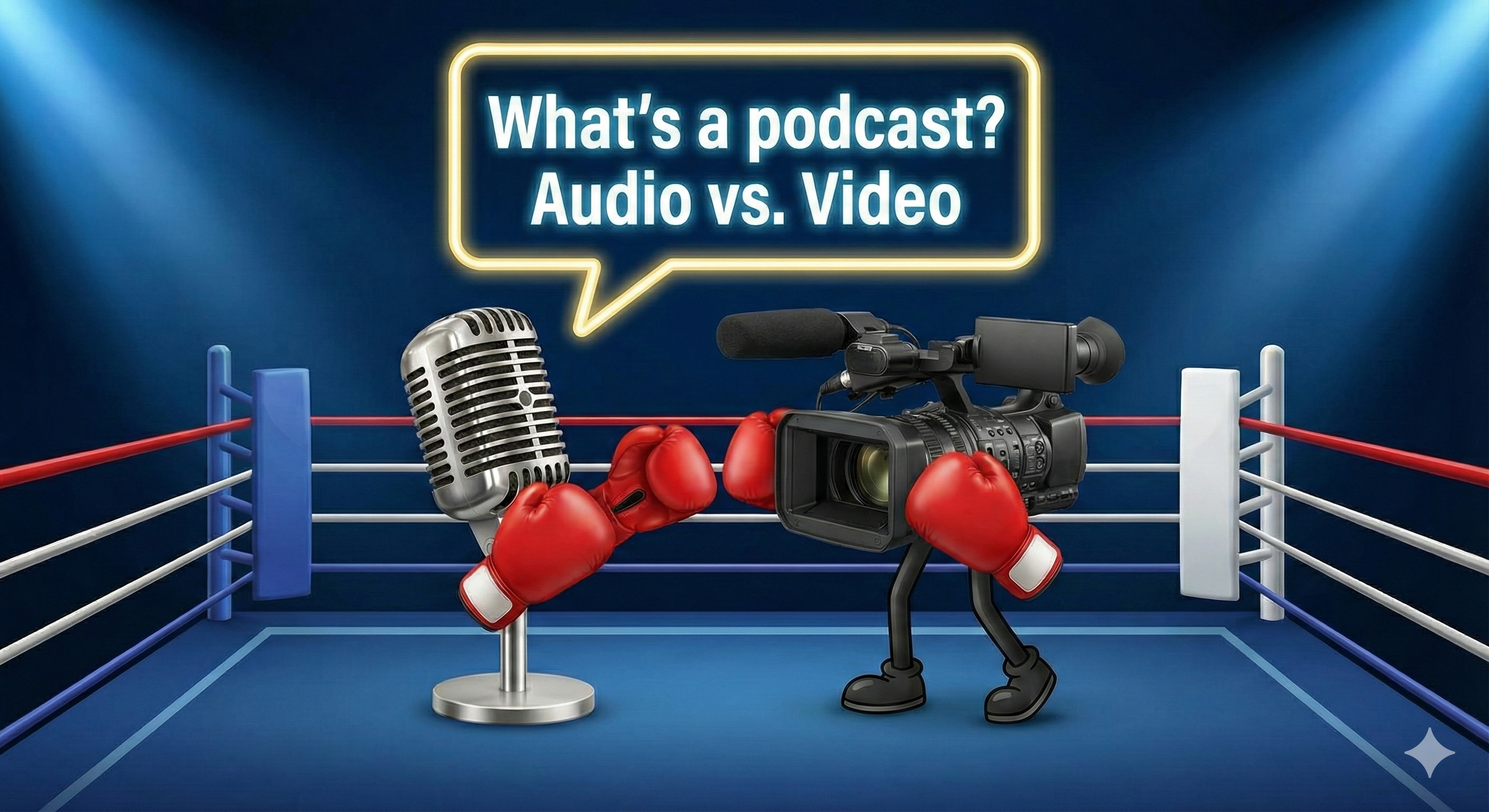
For the last few years, we’ve been right here - the identity crisis phase. Conferences became group therapy sessions. Articles and agencies debated the definition of a podcast. So much hand wringing. Can a podcast be video? (See Joe Rogan).
Meanwhile, audiences simply watched our content on YouTube and wondered why more podcasts din’t have video. The audience led the industry. And yet today we know podcasting is not audio or video, from research we did with Coleman Insights, it’s both
Era 4: The Liquid Content Era
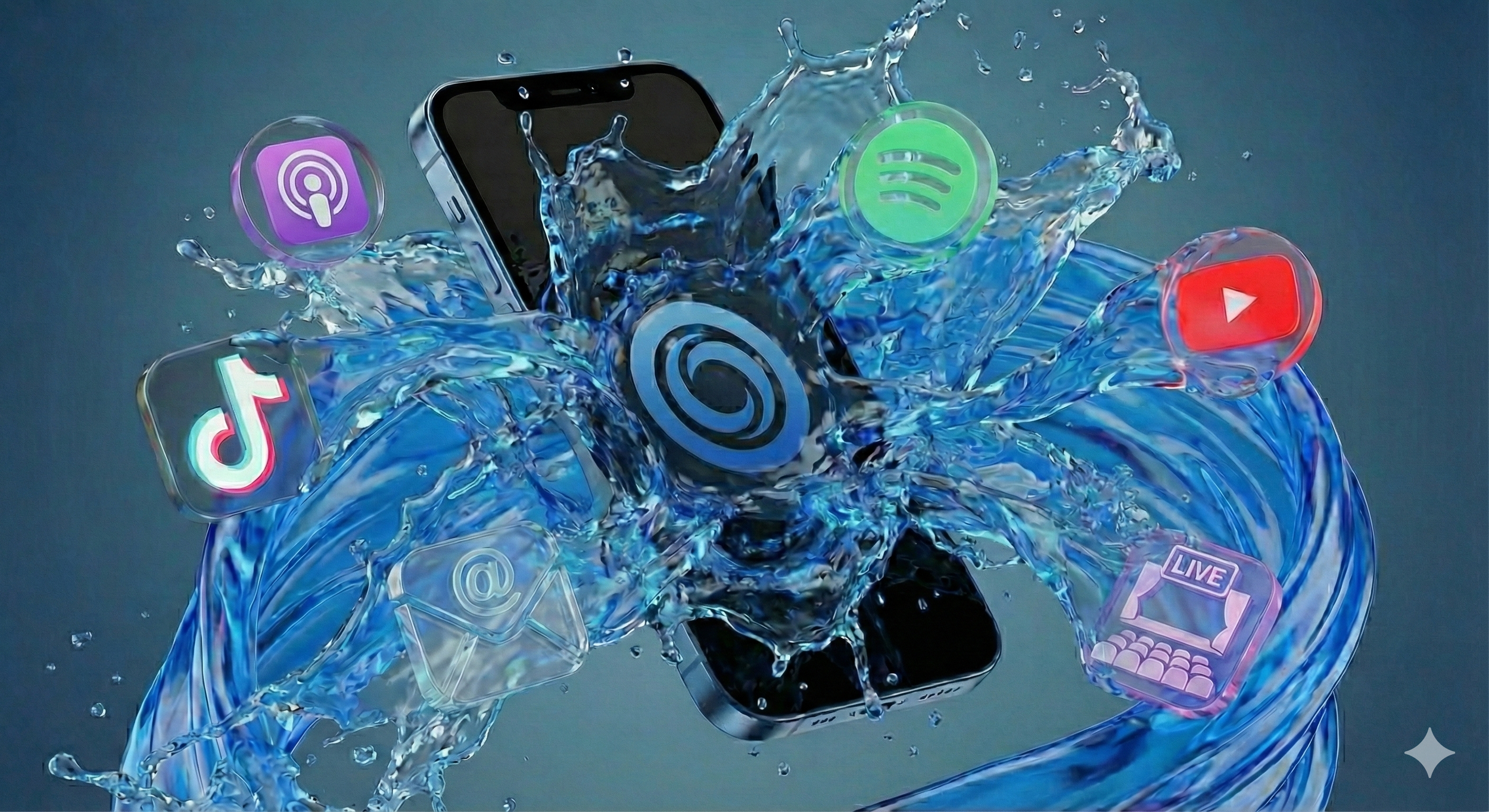
The next era of content isn’t emerging — it’s here.
We’re in the liquid content era, defined by how audiences behave—not by how the industry wishes they would.
And yes, the debate is still very much alive. Is a podcast a format? A platform? A show? An on-demand container? In many ways, that conversation misses the point. A podcast isn’t really a format anymore — it’s a form. It’s a style of storytelling.
Increasingly, content no longer belongs to a single format. It moves. It adapts. It flows like liquid.
Podcasting is no longer a one-size-fits-all medium. It has become an ecosystem. A podcast can be a YouTube show, vertical clips, newsletters, short episodes, livestreams, or even a live event. One story can take many shapes — and the content bends around the audience, not the other way around. As Rob Greenlee put it: “The show itself is no longer the final product — it’s the engine.”
To be clear, this won’t be right for every show, and that’s okay. Some podcasts will continue to thrive with a focused, single-format approach. But as attention fragments and competition grows, meeting people where they already are — in the form that fits their moment — is becoming harder to ignore.
Liquid content is designed to adapt to context while maintaining meaning. This concept of content liquidity has been associated with Matthieu Lorrain, a longtime creative and innovation leader at Google, whose work helped popularize adaptive, context-aware storytelling across formats and surfaces.
In this era, the audience sits at the center of an ecosystem - not the feed, not the platform, not the format.
The fourth era of podcasting isn’t really about redefining what a podcast is. It’s about accepting how people use them now.
Meet people where they are.
Build momentum through flow, not format.
Make your content liquid.