
Where Podcasting Fits at Spotify
BL;UP (Bottom Line Up First)
Spotify is testing a feature that could make podcast ads much easier to skip. That’s good news for listeners who want to bypass ads and potentially bad news for publishers and advertisers. It also tells us something about where podcasting sits within Spotify’s much larger business.
———

Screen shot of my phone
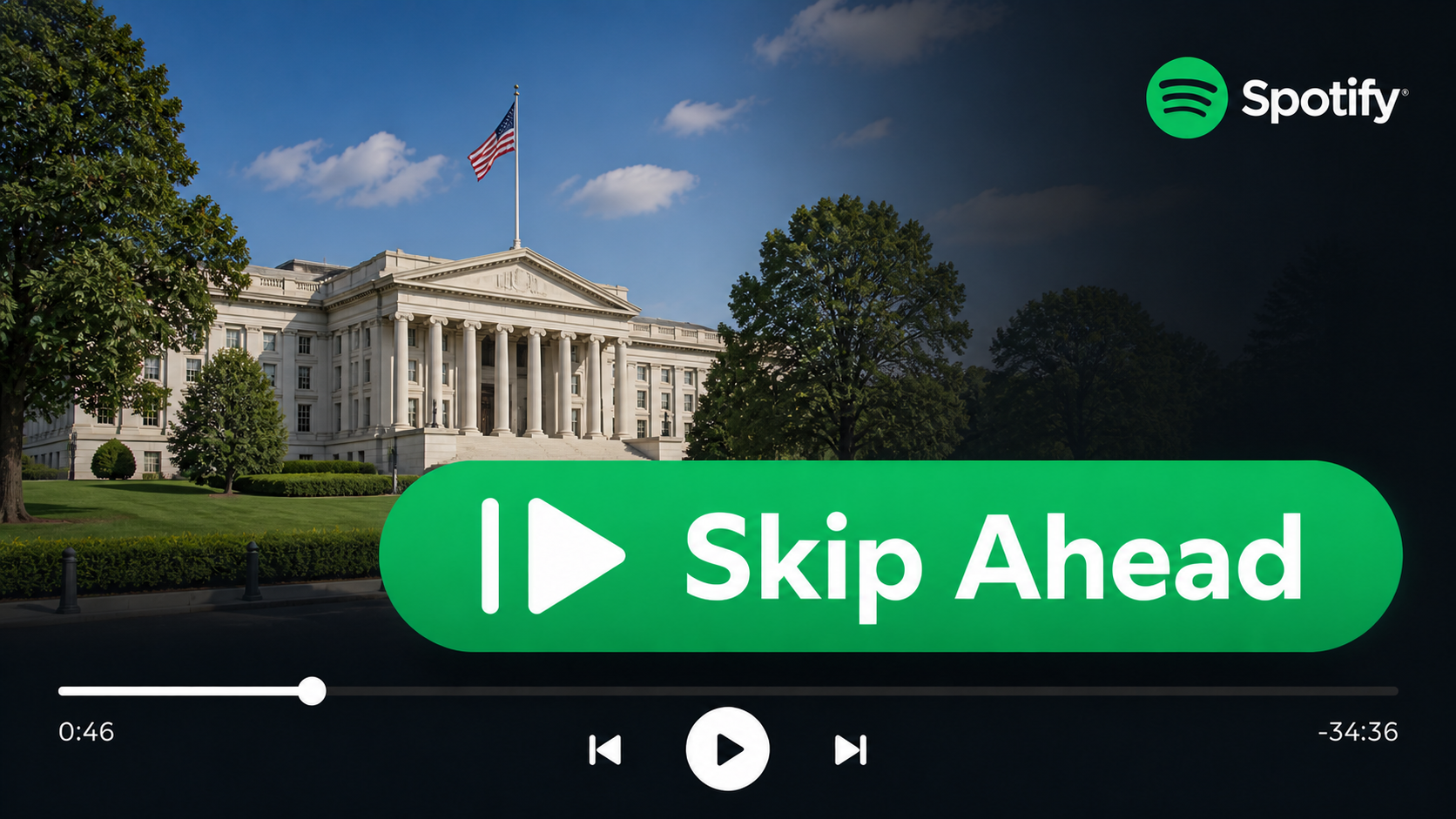
Spotify is testing a new Skip Ahead button in its app. With one tap, a listener can skip past an ad break, promo, or other content instead of jumping ahead in 15-second increments. The feature is available for some Premium subscribers in the U.S. and UK. It showed up on my app right away.
The podcast industry’s reaction has been somewhere between alarm and fury that a platform it relies on would make podcast ads easier to skip. Podnews called the feature a "significant threat" to ad-funded shows.
I teach the Business of Podcasting course at NYU, and this is exactly the kind of case I would bring into class. The Skip Ahead button may be new, but the business problem is not.
What Happened
Spotify didn’t announce the Skip Ahead test. James Cridland’s Podnews caught it in the wild and broke the story. Max Tani at Semafor followed with “Spotify’s new ‘skip’ button could end the podcast business as we know it,” reporting podcast executives were "terrified."
Crooked Media co-founder Tommy Vietor called out Spotify directly on X: "Very cool of @Spotify to try and destroy the podcast industry. What a great partner!"
What gets skipped? Just about any spot break and apparently that includes ads on Spotify’s own content including The Bill Simmons Podcast.
A Spotify spokesperson told Semafor, "We regularly conduct tests at Spotify. Some tests become permanent features, while others help inform future product development." Fair enough.
Why It Matters
Podcasting has been core to Spotify’s pitch that it is more than a music jukebox and clearly driven by their need to diversify its business beyond the incredibly expensive music streaming model.
It spent years telling the industry it’s serious about podcast advertising. Spotify acquired Megaphone, launched the Spotify Ad Exchange, and pushed deeper into video podcasts to compete with YouTube.
So how do we go from that to ad skipping?
It may be because Skip Ahead comes from a different group inside Spotify. I’m speculating here, but picture a team whose job is retention — keep people in the app, cut the friction that makes someone bail mid-episode. From that seat, an ad break isn’t a revenue line. It’s a drop-off point.
That may well improve the listening experience. It also makes it harder for publishers to reliably monetize their content on Spotify.
Back up 5,000 feet and look at where Spotify actually makes its money, and a simpler explanation shows up. Spotify can afford to run this test because podcast advertising is a small slice of what it earns.
Follow the Money
Spotify’s revenue mix gives us a pretty good clue about what carries the most weight.
How big is podcast advertising on Spotify?
In 2025, Premium subscriptions accounted for 89% of Spotify’s revenue. The entire Ad-Supported segment — advertising across both music and podcasts — made up the other 11%. Spotify does not break out podcast advertising separately, so the split you see below is my own estimate: podcast ads at roughly 4% of total revenue. I ran the number past a few sources including a large ad agency and they think it holds up.
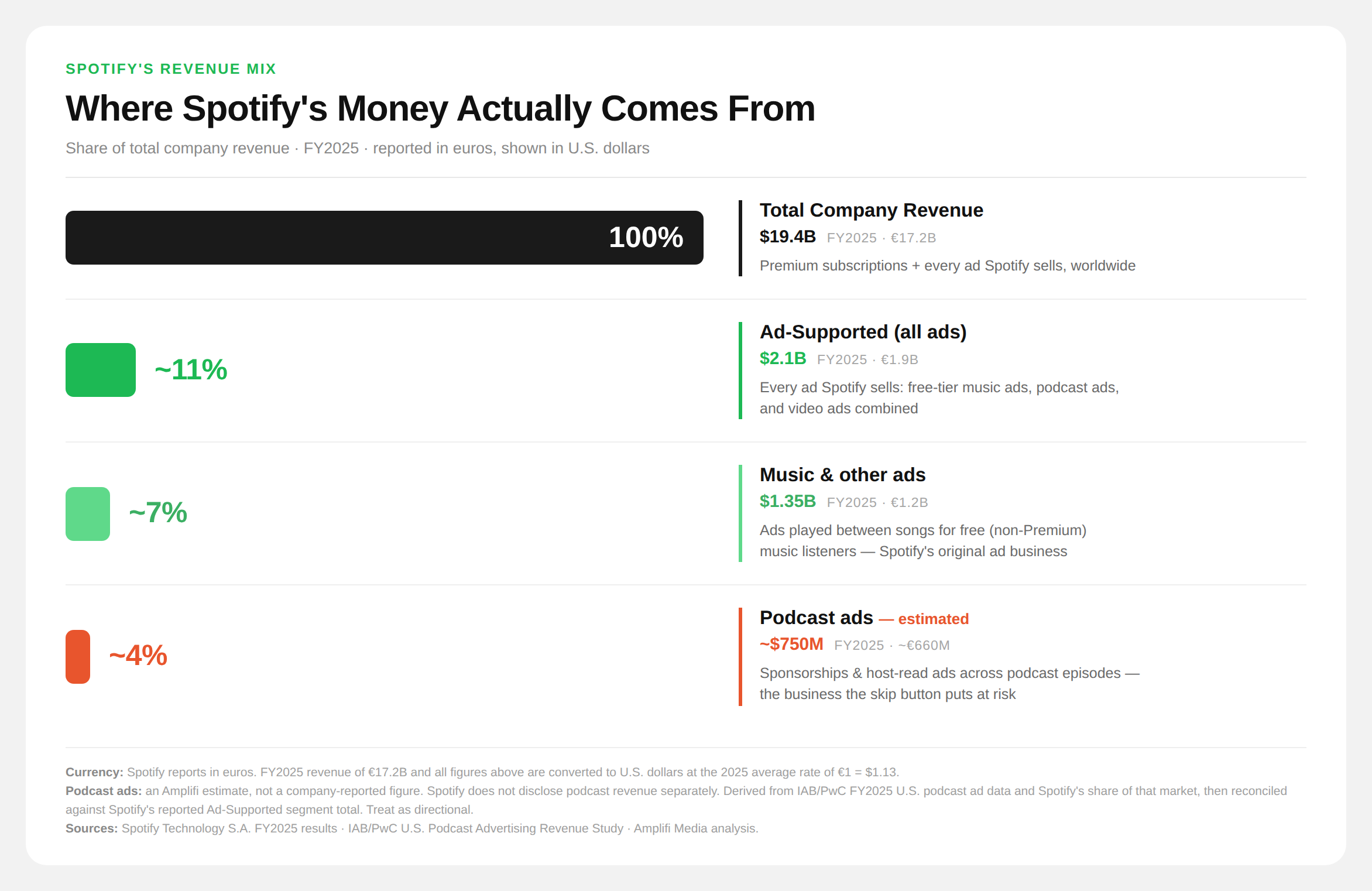
This chart lays out where Spotify makes nearly all of its money and where podcasting likely figures into the mix. What’s clear is podcast ads are only one piece of their much smaller Ad-Supported business.
BTW, Spotify Is Listening
It’s not the first time a Spotify product change has rattled the podcast industry. Last year, publishers objected when Spotify announced public play counts, worried that advertisers would start picking apart episode performance. Within days, Spotify walked it back to broad audience buckets.
The Skip Ahead button is a different animal. As consumers, we all like skip ahead features. If Spotify’s own testing shows that it keeps people listening longer, maybe the button stays. And monetizing podcasts on Spotify gets harder.
Publishers have to pay attention when a platform as big as Spotify changes how people consume podcasts. Using OP3 data, Podnews estimates that Spotify is responsible for at least a quarter of podcast downloads globally and is the largest podcast platform in many countries.
The Lesson
As podcasting moves from a cottage business to playing in the major leagues (mixed metaphor but I’m going with it) Apple, Spotify and YouTube give podcasters access to an audience none of us could build alone. They also control how that audience experiences the work.
I’ve written before about the Liquid Content era and what happens as podcast audio and video move across platforms. This is another part of that story. The more podcasters depend on platforms for distribution, the more those platforms influence how their content is consumed and monetized. I flagged the same dynamic in my piece on the Attention Economy’s arrival in podcasting. Platforms optimize for what matters most to their bottom line. For Spotify, engagement and Premium subscriptions sit near the base of that equation.
So what does a publisher actually do? Start by complaining. We have seen Spotify move before. But keep in mind that what podcasters have are direct relationships with listeners, ad formats built into the content rather than dropped beside it, and a distribution mix where no single platform sets the terms.
If one feature test in Stockholm can reprice your inventory, that is the real problem to work on.
Bottom line: Spotify is huge in podcasting but if you follow the money, podcasting isn’t huge to Spotify.