
Gen Z, Unfiltered: When Clips Become the Show
I put three of my NYU students on stage at Podcast Movement 2026 for a conversation about their media habits. We dug into how they discover podcasts, listen to or watch them, and decide when to bail. Some had consumed shows entirely through clips, without playing a full episode.
I found that I was watching the entire podcast on these clips… I wasn’t interested in going to listen or watch the podcast, because I had just seen the greatest part of it. — Nikolai Kovach, NYU
BLUF (Bottom Line Up Front)
Four years ago, when NYU and I piloted The Business of Podcasting course, ChatGPT wasn’t on the radar and YouTube barely came up. Today, video dominates our conversations, and the robots haven't taken over the planet yet, but they've definitely taken over the syllabus.
The class has become a weekly Gen Z focus group where students share how they choose and use podcasts and other media.
At Podcast Movement in New York, three students from this semester’s class joined me for “Inside Gen Z’s Media Mind: A Live Focus Group.” Elizabeth Nelson and Yuyoung Chung are seniors at Tisch. Nikolai Kovach is a junior in Communication.
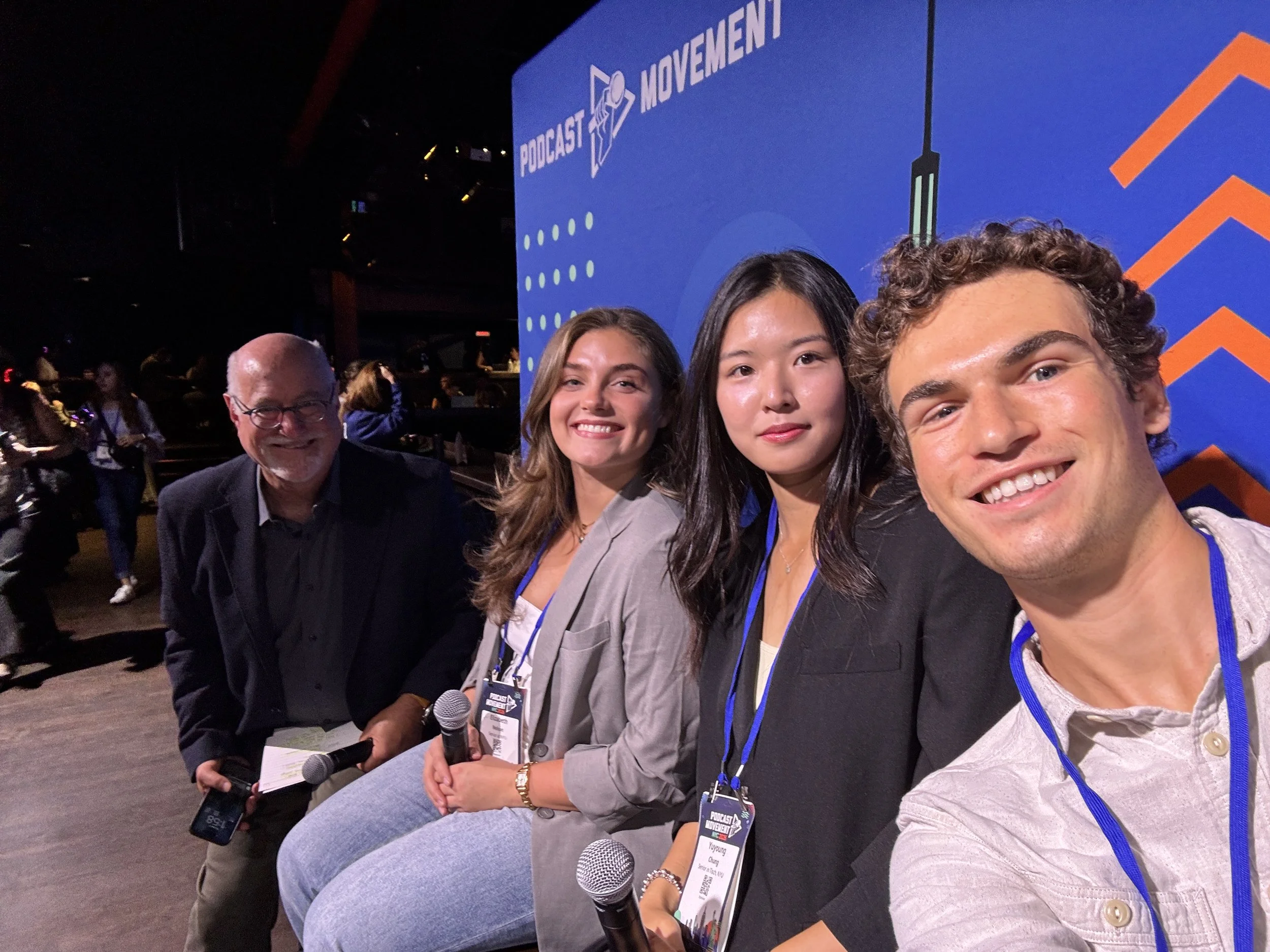
Three students certainly can’t speak for a generation. But their experiences offer useful clues about how young audiences discover shows and decide what deserves their time. A few takeaways:
• Sometimes, the clip is the show. I call it “best-of-ing.” Viewers know the best moments are featured in snippets. Clips can leave them feeling they’ve seen enough.
• Discovery runs through search. When a clip interests these students, they look up the show rather than tap the link in the creator’s bio.
• Attention has to be earned. The opening seconds matter. Sampling a show doesn’t mean staying.
When Clips Become the Show
Nikolai’s TikTokand Instagram feeds are filled with clips for podcast shows. He figured if the best parts were already in his feed, he was all set—there was nothing left to go get.
That’s the risk I explored in my Thought Letter, The Clip Economy Is Eating Everything, distilled by Nikolai into one sentence.
Elizabeth heard the same question and saw it differently. A good clip makes her want more. She visits the show’s page or channel, watches other clips, and downloads the full episode. Her description is the best explanation of a quality clip I’ve heard.
It feels like when a friend texts you, “Oh, I have a really great story to tell you,” and then you just can’t wait to hear what else they have to say. — Elizabeth Nelson
Elizabeth also offered a theory about why they disagree. Nikolai favors news shows; she prefers conversation. An informational clip can give you a key takeaway or answer a question. A conversational clip can introduce a relationship you want to spend more time with.
That distinction makes sense. But Yuyoung, who enjoys some clips and goes long-form on science shows, comes at podcasts from a different angle: podcasts aren’t soccer highlights, and “context is everything, and you can’t get that from just a snippet.”
So, do clips replace full episodes? It depends what the audience wants, how much the clip delivers, and how many are available. Viewers may watch several clips from the same show and feel they’ve seen enough. AI clipping tools make producing more snippets easier, but that volume can leave viewers with less reason to watch or listen to the full episode.
Don’t Rely on the Link in Bio
Someone in the audience asked if the students ever tap the link in a creator’s bio. None of them did. It had barely occurred to them.
Here’s the path they actually take. They see a clip, visit the social account, watch a few more, then open an app and search for the show.
The exception is YouTube Shorts, where shows add a direct link to the full episode. In that case, the platform does the handoff for you. Everywhere else, it depends on whether viewers remember your name and if search returns your podcast on the first try. Search visibility as part of the acquisition funnel has increased.
It’s About Behavior, Not Formats
Ask the industry whether podcasts are audio or video and you get a debate. Ask these three and you get a daily schedule.
Elizabeth watches podcasts at her desk and switches to audio when she heads out. Yuyoung often listens on the subway—she’d rather keep her eyes up in New York but watches conversational shows with friends, “because you’re seeing a real interaction.” On Spotify, she opens the transcript when she misses part of a conversation.
Nikolai prefers audio and said, “There is something focused about listening to something and not watching it.”
That’s liquid content in practice. The show stays the same but the way people consume it changes with their surroundings, device, and whether their hands and eyes are free. It’s important to make it easy for people to move between those modes.
These students mostly use laptops in their dorms, but big screens are sneaking up on them. Yuyoung spent the summer watching YouTube projected onto an apartment wall and said it changed the game. Elizabeth had watched her first podcast on a TV the previous week and walked away understanding the appeal. For these students, consuming podcasts on a large screen may depend on having access to one.
They Drop Out of Shows Fast
Recently, I wrote about the industry’s debate over consumption metrics, from one frame on YouTube’s public count to 30 seconds for an AMP play. Nikolai, who has never read the AMP Podcast Accords, arrived at the same number on his own.
Those first 30 seconds are the most critical 30 seconds of a podcast. It’s when people decide whether they want to listen or they want to bail. — Nikolai Kovach
After that, he said, you have another minute, maybe five. Elizabeth quickly abandons about half the new shows she samples. Yuyoung also moves on quickly. But once she finds a show she likes, she says, “I’m very loyal.”
What struck me was their awareness of what the firehose of content has done to their attention. Nikolai called Gen Z’s short attention span ‘terrible’ and said many of his peers are working on it. Elizabeth periodically deletes TikTok and Instagram “because I am trying to get my attention span back.”
They know focus is scarce and make deliberate choices about where to spend their time.
Discovery Is Still the Hard Part
Yuyoung has struggled to find new shows. Her workaround is a Spotify AI playlist feature, which she said lets her prompt for podcasts based on her interests.
Spotify earned praise from this group for bringing video, clips, and transcripts into one experience. Nikolai said it’s “doing an amazing job.”
This feedback is a reminder that device choice shapes the options. Yuyoung is on Android, so Apple Podcasts wasn’t part of her consideration set.
Where They Get Their News
We also talked about news. The trusted brands held up: The New York Times, The Daily, The Economist, and CNNwere mentioned. Yuyoung gets most of her news from creators on Instagram and TikTok. Nikolai does too. No one mentioned watching news on cable or any other linear channel. In class, I ask who David Muir is. None of my students know. David anchors ABC World News Tonight, the most-watched evening newscast in America. The generational shift from linear to digital is profound.
What Happens Now
• Give each clip a job. For Amplifi Media Advisors clients, we recommend that information-based shows focus on clips that tease the question without delivering the complete answer. Conversation shows should showcase the chemistry.
• Earn the opening. Within 30 seconds (or less), listeners or viewers should understand why the episode deserves their time. Even for an ongoing series, every episode has to earn their attention again.
• Make the show fit their day. Audio, video, and transcripts can serve the same person at different moments. It’s all situational, depending on where they are and what they’re doing.
• Measure beyond clip views. Look for evidence that clips help people discover and consume your full episodes. Use direct links where available and watch for changes in episode performance.
Give Them a Reason to Return
These students described quick decisions about unfamiliar podcasts and loyalty to the shows they connect with. The show has to supply the reason to return.
A clip may be someone’s first encounter with your podcast. Whether it becomes the only one depends on what it delivers and what it leaves them wanting. That’s where strategy comes in.
My thanks to Elizabeth, Yuyoung, and Nikolai. Watch the full session here.
Want your clips to do more for your show? Amplifi Media Advisors helps teams connect content, discovery, and audience growth. Let’s talk.