
Is Podcasting Ready for Vertical Video? An interview with Hernan Lopez
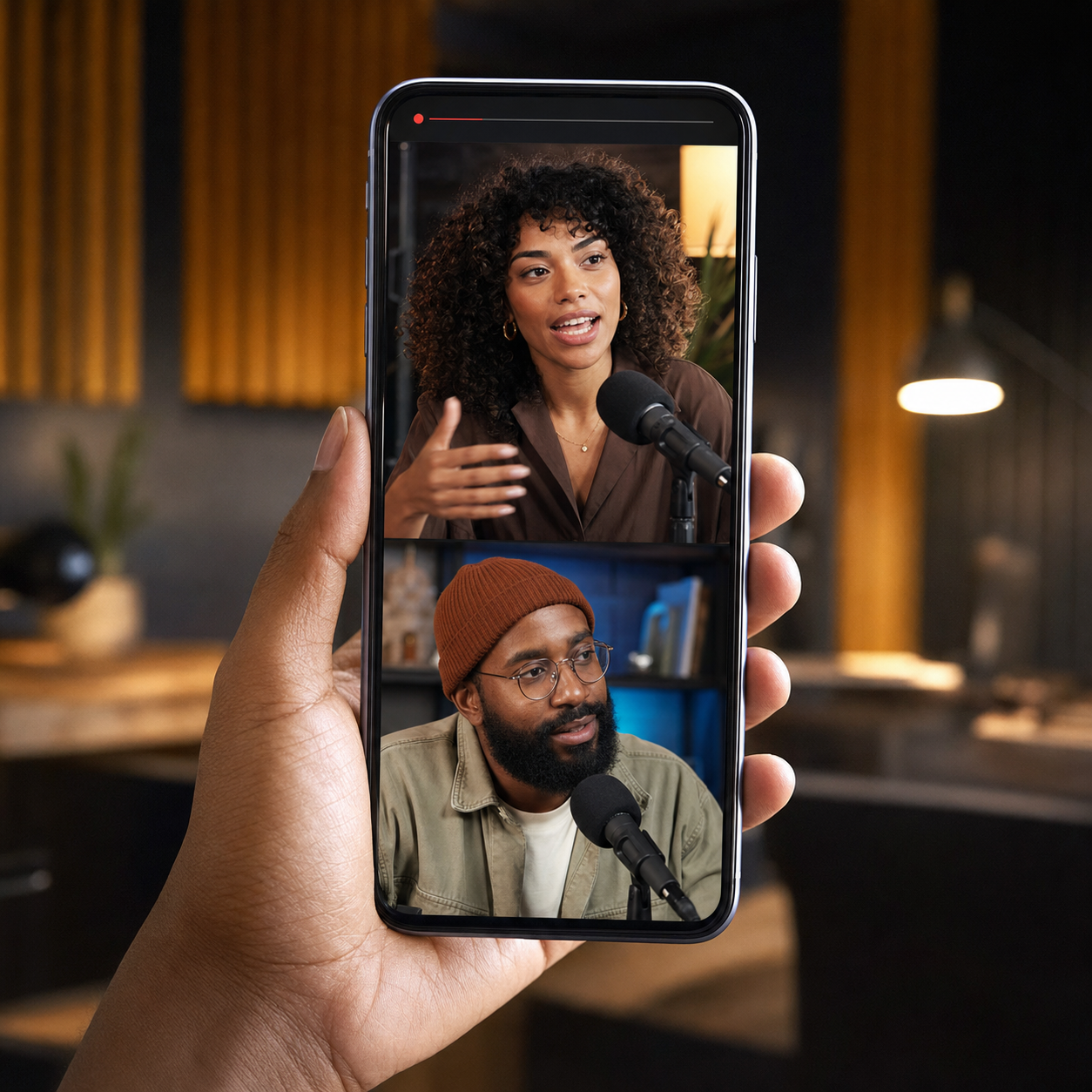
Podcasting has grown up fast. What started as a scrappy niche business a decade ago is now a real industry — real ad dollars, competitive bidding for shows, platforms fighting over exclusives. But that growth is happening at the exact moment the rest of media is going through its own profound shift: how people listen/watch, where they listen/watch, and what even counts as an audience are all being rewritten in real time.
We've gone from the ascent of podcast video to clipping farms, and now “vertical video” is the next shift — and podcasting can't afford to sit this one out. Across nearly every major platform it's been restructuring how video, and increasingly audio, gets made, distributed, and monetized.
What follows is a quick primer on how we got here followed by a conversation with Hernan Lopez. Hernan built Wondery into one of podcasting's first major studios before selling it to Amazon in 2020. He now runs Owl & Co, the Vertical Index, and just wrapped the first-ever Vertical Media Summit about what all of this means if you make shows for a living.
How Vertical Took Over (The Short Version)
Vertical video isn't just a clip. It's content built for the way people actually hold a phone—full-screen and upright, native to mobile rather than cropped down from TV or a laptop.
For most of the 2010s, every platform had its own lane. TikTok's U.S. arrival in 2018 changed that by pairing vertical video with an endless, personalized algorithmic feed—shifting social media from feeds built around who you follow to feeds built around whatever holds your attention. Instagram answered with Reels, YouTube with Shorts, and before long every major platform was competing the same way. Vertical, algorithmically distributed video became the internet's default language.
The scale is hard to overstate. Meta says Reels is on pace to become a $50-billion-a-year business and that Instagram users now spend more than half their time there. YouTube reported 200 billion daily Shorts views by the end of 2025—earning more per watch hour than long-form. And it's no longer just the social apps: Spotify, Disney, Netflix, Prime Video, and Paramount+ have all bolted on their own vertical feeds and "Clips" tabs.
I knew vertical was at critical mass when my adult children told me to stop taking horizontal photos for sharing on our family group chats.
Vertical is no longer just a social media format. It's becoming the default way digital media is discovered, distributed, and monetized—commanding more attention than almost any format ever created, and proving an extraordinarily effective advertising vehicle.
The Conversation
Podcasting is operating inside a vertical video world. So, I sat down with Hernan Lopez, the founder of Wondery to help make sense of what it actually means for the people making shows and why podcasting can’t afford to sit this one out.
Steve Goldstein: What is vertical video, really, and how is it different from the clipping podcasters were already doing two years ago?
Hernan Lopez: It's not a format or an aspect ratio. Vertical video is a third audiovisual language, after film and TV. It started as short-form, creator-facing entertainment, then branched into sub-genres like microdramas, vertical news, and vertical interview shows. Clips belong to the language, but they're a discovery tool, not the destination. There's no rule that vertical has to stay short-form. I expect long-form vertical video podcasts, shot natively rather than cropped from a horizontal set, within the next several months.
SG: Why did vertical win the phone in the first place?
HL: Ergonomics, basically. Vertical emerged because our hands want to hold the phone this way — it was designed to be held this way. It’s a genius feature of ergonomics and consumer behavior. What we originally consumed on our phones wasn’t built for it; it was horizontal video cropped down. Vertical goes back to around 2010 as a phone feature, but as a language I’d pin it to the late 2010s, with the musical.ly and TikTok breakthrough. And the definitions keep moving — TikTok redefined “short” as about 20 seconds, while “long-form” is usually thought of as 30 minutes or more. There’s a whole space in between, and that’s where I think vertical goes next.
SG: You just ran the first-ever conference dedicated to vertical. How'd it go, and what surprised you?
HL: The biggest headline was the number we presented for vertical video revenue. Excluding China, it’s on track to hit $150 billion in 2026, up from $106 billion. One thing to be clear about that figure: the vast majority of it is advertising on Meta and TikTok, not the buzzy corner everyone fixates on. The conference itself exceeded my expectations, 260 attendees from every major streamer, studio, tech platform, and talent agency in the room, plus another 120 on the waitlist.
SG: Let's talk microdramas specifically. We hear about this fast-paced and short storytelling format often, but who's actually watching these and how do they make money?
HL: Two big misconceptions to clear up. First, it’s not primarily an advertising business. Apps like ReelShort, on pace for a billion dollars in revenue this year, monetize through in-app purchases: the first ten or so episodes are free, then you pay per story or subscribe. They’re engineered around very effective cliffhangers, designed to get you invested before the paywall hits. China is about three years ahead of the U.S. curve and already gets roughly half its microdrama revenue from ads, so I expect the U.S. to follow. Second, it’s not a Gen Z habit. Romance is about 90% of the inventory on the top apps, and the core audience is women 35 to 40, watching primarily at home at night, not on the go the way people assume.
SG: These sound pretty disposable, cheap, formulaic, romance-by-the-numbers. Does that stay true as the format matures?
HL: Think about lineage. Microdramas are to vertical what soap operas were to television in the 1950s. And the soap opera of the fifties led to Desperate Housewives, which led to Succession. The early form is always a little crude, but the stories and formats evolve into completely different things. So no, I don’t think it stays disposable. This is just the primordial version.
SG: Is there any reason this format doesn't expand well beyond drama?
HL: None at all. We’re already seeing vertical comedy, vertical news, vertical sports, vertical live shopping. The Emmy-nominated show Subway Takes is essentially a vertical podcast that happens to live on Instagram. There’s even scripted vertical comedy now, a show called Roomies, native to Instagram, that plays like an early creator version of Friends built for the vertical medium. Peacock is testing vertical NBA content. Whatnot, a live-shopping app worth $11 billion, launched vertical-native instead of retrofitting the old QVC model.
SG: Jeffrey Katzenberg must be kicking himself. Was Quibi just the right idea at the wrong time?
HL: Three things killed it: spending too much per minute of content, retrofitting shows that were conceived for TV instead of building natively for vertical, and brutal timing, launching right as TikTok went viral, free, and was spending heavily to acquire users.
SG: Who’s actually done it right, then, gone native instead of retrofitting?
HL: The New York Times is the best example. They have a long, tortured history of investing in video, and because they’re the Times, they wanted to do it at the most premium level, build a documentary, sell it to FX, win awards. High-end, beautiful work. But who watches video on a computer? Not many people, and Times readers especially watch on their phones. So last year they launched their Watch tab, native vertical. You can tell it’s not retrofitted, everything there is shot vertically from the start. It’s doing quite well, and they’ve called it out on their last two earnings calls.
SG: You mentioned Netflix launched a vertical clips tab a couple of months ago. Is it actually catching on?
HL: They rolled it out with a lot of fanfare, but when I informally polled people a few weeks back, fewer than 10% had it enabled or even knew it existed. It's early, but it's also a reminder that a horizontal-first platform can't just bolt vertical on and expect it to behave the same way.
SG: Here’s the one that worries me most, and my students gave me the term for it: “best-of-ing.” They’ll watch three or four clips, decide they’ve seen the best of the episode, and never listen to the whole thing. They’re best-of-ing you. What should podcasters do about that?
HL: “Best-of-ing”, I’ve never heard that, but it’s exactly right, and it means it’s cannibalistic. That’s a real risk. My theory on why nobody’s cracked long-form vertical podcasting yet: the industry spent the last five years optimizing everything for how it looks on a TV screen, first with video, then with YouTube. Making the leap back to “maybe mobile was the medium all along” means building vertical-native content, not just repackaging what already exists.
SG: So very helpful and insightful.Thanks, Hernan.
The Lesson
What strikes me is how quickly vertical video has gone from being an interesting trend to a fundamental change in how media works. This isn't some future trend to plan for. It's already the media water we're swimming in.
A few threads worth pulling on, based on everything above:
Don’t mistake discovery for consumption. Clips can introduce a podcast to new audiences, but the real opportunity is in vertical-native long-form content, not cutting existing shows into smaller pieces.
Take the cannibalization risk seriously. If four or five clips a week let listeners feel like they've "heard/seen the episode," you may be training your own audience away from the full show. I think about the comment from podcaster Ed Elson a few weeks back in our Thought Letter about the clip economy, someone said to him “Big fan. I don’t actually listen to the show, but I watch your clips.” Gulp. Worth carefully following your analytics.
Question your assumptions. It’s important to understand who's actually watching. It’s not just Gen Z, vertical audiences skew older and more female. They watch mostly at home at night and not on the go. Build and schedule content around the actual behavior.
Build for the format you're in, don't retrofit the one you came from. This is easier said than done. Quibi failed by shooting TV shows for phones; the New York Times succeeded by building vertical-native. That's the whole lesson, and it applies directly to how podcasters shoot and edit for vertical.
Know that the business model is still evolving. Even Hernan, who tracks this full-time, doesn't have a fixed model for how vertical's monetization maps onto podcasting's own move away from downloads. The economics are still unwritten.
This isn’t really about platforms and formats. It’s about recognizing that our mobile-first media world has developed its own visual language and podcasting’s current video playbook may not be enough.
Every major shift in media starts out looking like a gimmick before it becomes infrastructure. The reality is that vertical video isn’t coming, it’s already here. The opportunity now is to build for that world, not just adapt to it.
What do you think?